Crossroads Urban Center.
  • Home
  • About
    • Our Board Members
    • Financial Reports
    • Contact
    • Nondiscrimination Statement
  • What We Do
    • Food Assistance >
      • Downtown Pantry
      • Westside Pantry
      • Food for the Holidays
    • Crossroads Thrift Store
    • Fighting Poverty >
      • FACE Hunger & Homelessness >
        • Action Alert
        • Report
      • Powerful Moms Who Care
    • Meet the Candidates Barbecue
    • Poverty Summit
    • Guest Speakers
  • You Can Help!
    • Donate
    • Help as you shop
    • Volunteer
    • July Food Drive
  • News
  • Home
  • About
    • Our Board Members
    • Financial Reports
    • Contact
    • Nondiscrimination Statement
  • What We Do
    • Food Assistance >
      • Downtown Pantry
      • Westside Pantry
      • Food for the Holidays
    • Crossroads Thrift Store
    • Fighting Poverty >
      • FACE Hunger & Homelessness >
        • Action Alert
        • Report
      • Powerful Moms Who Care
    • Meet the Candidates Barbecue
    • Poverty Summit
    • Guest Speakers
  • You Can Help!
    • Donate
    • Help as you shop
    • Volunteer
    • July Food Drive
  • News

Thank you to everyone who helped with the Hunger Hike

4/14/2025

 
On Thursday, April 10, 2025, over 40 people gathered outside the federal building in downtown Salt Lake City to draw attention to ways that food tariffs and cuts to federal nutrition programs increase hunger in Utah.  We are grateful to everyone who helped make this event so fun.  Several pictures can be found below.  This article from Channel 13 does a great job describing the event:
www.fox13now.com/news/local-news/northern-utah/dont-cut-snap-utahns-gather-to-rally-against-congress-draft-that-could-cut-food-aid-programs
Picture
Picture

Mia Love's Immigration Policy Legacy

3/31/2025

 
by Bill Tibbitts

On March 23, 2025 Mia Love died.  Love was a descendant of Haitian immigrants who converted to the Church of Jesus Christ of Latter Day Saints, moved to Utah. started a family.  In 2008 she successfully ran to be a member of the Saratoga Springs City Council and the first person of African American descent to win an election in Utah County.  She later became Mayor of Saratoga Springs and then, in 2012, become the first African American Republican women to be elected to Congress.

My personal interactions with MIa Love are fairly limited.  During Donald Trump's first term in office she was one of the few Republicans  in Congress who were willing to publicly support legislation that would have provided a path to legal residency for undocumented immigrants who first came to the United States as children, also know as "Dreamers".   During this time I helped to organize meetings with Love's congressional staff and ,members of the coalition that is now called FACE Hunger and Homelessness.  The purpose of these meetings was to thank Love for spending political capital to support young people who had lived most of their lives in the United States and ask if there were ways we could support her efforts to promote good legislation.

In one of the meetings with staff someone mentioned that my son, Oliver, had recently died after a long battle with leukemia.  Her staff person expressed sympathy and then the conversation was redirected to discussing immigrations policy.  A day or two later I was surprised when this staff person told me that Love had expressed an interest in talking to me personally.  When she called we did not talk about policy at all.  Instead she told me that she had read Oliver's obituary and that he sounded like a remarkable person.  She listened while I told her stories about Oliver and then told me a bit about her own children.  When we finished talking she asked for my wife's phone number and then called her and talked for much longer than she had talked to me.  

I do not claim to have any kind of deep insight into Love's character because of those two phone calls.  What I do know is that she was a sitting member of Congress and a mother with children at home and so she really did not have time to call either me or my wife that day.  She had an impulse to reach out and be kind to  strangers and she acted on it despite all the other demands for her time and attention.  I am not always as good at acting on those kinds of impulses but it was a blessing at that moment in my life that someone else was willing and able to model that type of kindness.

Love's funeral will take place one week from today, on April 7, and so a lot of important and powerful people are paying tribute to her and her legacy.  Last week Congress honored her with a moment of silence.  On Sunday her body will lie in state in the Rotunda at the Utah Capitol Building.  

One way people who represent Utah in Congress could honor Love's legacy in a deeply meaningful way with ongoing effects would be to pass legislation implementing the kinds of moderate, bipartisan, immigration reforms that Love championed while she was in Congress.   It should be possible to reach a bipartisan agreement on some positive immigration changes.  Earlier this year President Trump said, "“We have to do something about the Dreamers because these are people that have been brought here at a very young age. And many of these are middle-aged people now. They don’t even speak the language of their country,”

I personally want to challenge the people who represent Utah in the United States Senate and House of Representatives to honor Love's courage and kindness by publicly announcing their intent to work on immigration legislation that protects Dreamers and refugees from places like Haiti, where Love's parents were born.  Perhaps the bill enacting these positive changes could even include her name.   In 2018, after meeting with President Trump, Mia Love stated, "The goal of any immigration reform should reflect our commitment to family, national defense, community and compassion.  Tonight, I received assurance from the President about his support for a permanent fix for DACA recipients."

A permanent fix for Dreamers was not passed in 2018.  Hopefully Congress will pass one in 2025.

If you agree that Congress should begin work this year on bipartisan immigration reform please contact Senator Lee, Senator Curtis and your Representative and let tell them.

Senator Mike Lee Contact Information
  • Website Contact Form:   https://www.lee.senate.gov/contact​
  • Ogden Office:   801-392-9633
  • Salt Lake Office:  801-524-5933

Senator John Cutis Contact Information
  • Website Contact Form:  https://www.curtis.senate.gov/share-your-opinion/​
  • Provo Office:  801-841-2665
  • Salt Lake Office:  801-524-4380

Utah's Representatives in Congress:
  • Utah Congressional District 1:  Representative Blake Moore
  • Utah Congressional District 2:   Representative Celeste Maloy
  • Utah Congressional District 3:  Representative Mike Kennedy
  • Utah Congressional District 4:   Representative Burgess Owens

If you are unsure who your Representative in Congress is you can find them here:  
www.house.gov/representatives/find-your-representative

Hunger, Homelessness and Poverty Weekly News Digest for March 24, 2025

3/24/2025

 
Every week Crossroads Urban Center gathers reporting about hunger, homelessness policies and news that either are happening in Utah or will have an effect in Utah.  This week we are highlighting three federal issues that have the potential to have a major impact in Utah:
  1. New federal requirements for homeless shelters are causing funding delays,
  2. DOGE and uncertainty about funding and policy are impacting housing and homeless services, and,
  3. Proposed cuts to healthcare, nutrition and housing assistance programs would increase homelessness in Utah and other states.

New federal requirements for homeless shelters are causing funding delays
The new administration at HUD has not been reimbursing homeless service providers for work performed under contracts signed during the previous administration until they agree to follow new rules concerning immigrants and transgender people.  Here are sources with more information about this issue:
  • National Alliance to End Homelessness:  The Anti-DEIA (Diversity, Equity, Inclusion, Accessibility) Executive Orders will undoubtedly have an impact on the work of ending homelessness
  • San Francisco Standard:   Trump tries to hold HUD grants hostage over DEI and immigration demands
  • Senator Adam Schiff:  NEWS: Sen. Schiff, Colleagues Demand HUD Remove Culture War Conditions Further Delaying $3.6 Billion in Vital Housing and Homelessness Funding
DOGE and uncertainty about funding and policy are impacting housing and homeless services
Homeless services around the United States are generally provided by nonprofit or governmental agencies that receive a large share of their funding from various federal programs.  Funding freezes and policy changes are  making it difficult for some agencies to continue providing services.  You can learn more about this issue by reading one or more of these articles:
  • Shelterforce:  Section 8 Under Trump: How Policy Uncertainty Is Affecting Affordable Housing
  • Center on Budget and Policy Priorities:   DOGE-Driven HUD Cuts Will Make It Harder for People to Afford Housing, Exit Homelessness
  • CBS News:  LA Housing Authority stops accepting Section 8 applicants due to federal funding "uncertainty"
  • Governing:  Housing Assistance Is Facing Cuts. State and Local Agencies Are Preparing

Proposed cuts to healthcare, nutrition and housing assistance programs would increase homelessness in Utah and other states
One of the top priorities for President Trump and Congressional Republicans this year is making tax cuts that were passed five years ago permanent. If they fail to pass a bill extending those tax cuts before the end of 2025 all of those tax cuts will expire. Some Republicans in Congress are saying that every dollar in tax cuts should be paid for with cuts to government programs. Programs they have suggested be cut include Medicaid, SNAP, and housing assistance programs.  Other Republicans have said they support making the tax cuts permanent but they will not vote for a bill if it includes major cuts to Medicaid.  If you are interested in learning more about this topic these articles and blog posts may be helpful:
  • Center on Budget and Policy Priorities:  Cuts to Health Care, Food Assistance, and Income Support to Fund Tax Cuts for the Wealthy Would Worsen Housing Instability and Homelessness
  • KFF;  Putting $880 Billion in Potential Federal Medicaid Cuts in Context of State Budgets and Coverage
  • The Century Foundation:  Trump and House Republicans’ Plan to Cut Food Assistance Is Even Worse Than It Seems​​

If you are interested in meeting people who are working together to address some of these issues in Utah please consider signing up for weekly updates on hunger and homelessness from FACE Hunger and Homelessness.
Picture

It is time for Utah to stop taxing food

2/10/2025

 
Only ten states in America charges sales tax on food.  Kansas just eliminated this unfair and unpopular tax.  A bill in the Missouri Legislature could eliminate the sales tax on food in that state.  Does Utah want to risk becoming the last state in the country where people are taxed for buying food at the grocery store?

Charging sales tax on groceries hurts low income families the most because they spend a much larger share of their monthly budget on food.  Research from the USDA shows that low income families spend 32.6 percent of their after-tax income on food while families with incomes in the top twenty percent spend 8.1 percent of their income on food.
Picture
Because food is such a big share of the budget for low income families those families were particularly hurt by inflation in food prices during recent years.  Analysis from the USDA shows that between 2019 and 2023 food prices increased by 25 percent.
Picture
This makes 2025 the perfect year for Utah to get out of the business of taxing food.  Almost any other approach to taxation would be more equitable.

Senator Nate Blouin has a bill to eliminate the state portion of the sales tax on food, SB 122.   The original version of this bill would have cut $200 million a year from the portion of the state budget that funds non-education programs like Medicaid and road repairs.  That fund does not have surplus and so it will be difficult to cut $200 million a year from it without hurting important programs for low income Utahns.  For that reason, the bill has been stuck in the Senate Rules Committee.

Senator Blouin has addressed the budget concerns by creating a substitute version of the bill that offsets the cost of eliminating all state sales tax on food by increasing the sales on non-food items by a very small percentage.  A  very similar bill passed the Utah House of Representatives in 2018 with broad, bi-partisan support.  In a year where national Republican leaders are proposing populist tax proposals like eliminating federal taxes on tips and Social Security income it seems like this should be a year where it is possible to eliminate one of the least popular taxes in Utah.

Two Ways You Can Help

1.  Contact the members of the Senate Rules Committee and ask them to assign the revenue neutral substitute version of this bill, SB 122 S 1, to a committee for discussion.  This a concrete way legislators can help families struggling with rising food prices that is very similar to a bill that passed in 2018 with strong bipartisan support.

Senate Rules Committee Members:
Senator Lincoln Fillmore, Chair,  [email protected]
Senator Keith Grover, Vice Chair, [email protected]
Senator Luz Escamilla, [email protected]
Senator Don Ipson, [email protected][email protected]
Senator Karen Kwan, [email protected]
Senator Dan McCay, [email protected]
Senator Kevin Stratton, [email protected]
Senator Todd Weiler, [email protected]
Senator Rod Winterton,  [email protected]

2.  Contact the members of the Senate Revenue and Taxation Committee and ask them to co-sponsor and support SB 122 S 1.  Eliminating the sales tax on food is simple, fair and popular.  

Senate Revenue and Taxation Committee Members:
​Senator Dan McCay, Chair, [email protected]
Senator Brady Brammer, [email protected]
Senator Kirk Cullimore, [email protected]
Senator Luz Escamilla, [email protected]
Senator Lincoln Fillmore, [email protected]
Senator Wayne Harper, [email protected]
Senator Chris Wilson, ​[email protected]
Picture

Over 100 people gathered at the Capitol Building last week to support solutions to child and family homelessness

1/28/2025

 
On the afternoon of Friday, January 24, over 100 people gathered in the Board Room of the Utah Capitol Building to support solutions to child and family homelessness. We are grateful for everyone who showed up and helped to make this event successful.  At this event we also released a report on child and family homelessness in Utah.  If you are interested in supporting policies discussed in the report please sign up to get weekly emaiL updates from FACE Hunger and Homelessness.
READ A NEWS ARTICLE ABOUT EVENT
READ OUR REPORT ON CHILD HOMELESSNESS
Picture
<<Previous
Forward>>
Picture
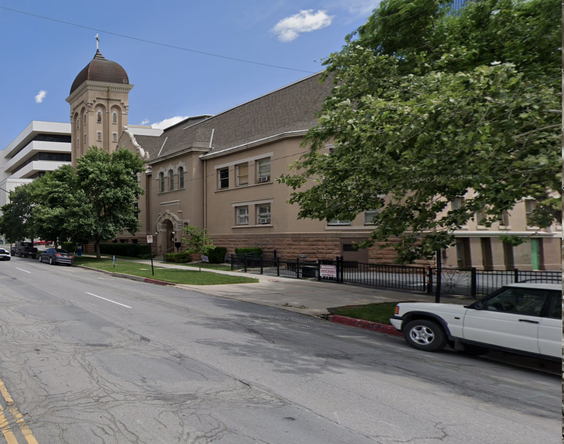
EMERGENCY FOOD PANTRY
347 South 400 East
Salt Lake City, UT  84111
801-364-7765
Monday – Friday 
9:00 AM – 5:00 PM

Picture
Picture
CROSSROADS THRIFT STORE
1385 West Indiana Avenue
Salt Lake City, UT  84104
801-359-8837
Tuesday-Saturday
​10:00AM-6:00PM
Picture
Picture
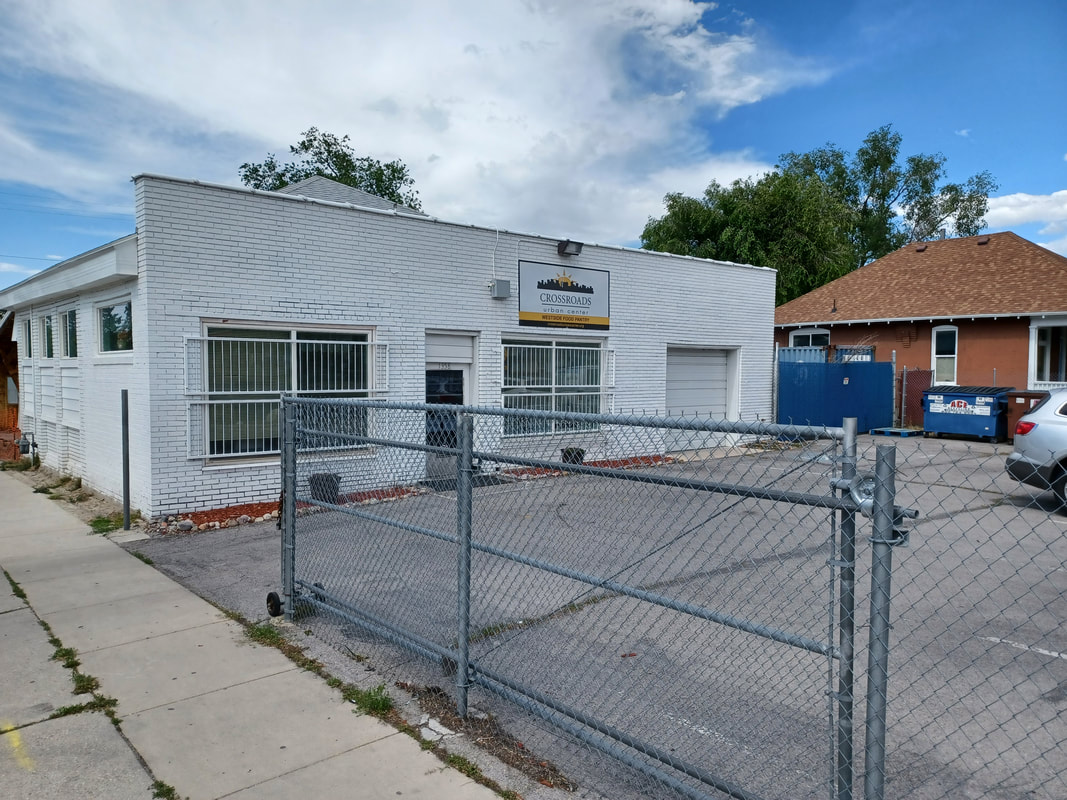
CROSSROADS WESTSIDE FOOD PANTRY
1358 West Indiana Avenue
Salt Lake City, UT  84104
801-935-4079
Monday-Friday
9:00AM - 5:00PM
Food only (no emergency services)
 ​Privacy Policy
Copyright © 2025
 Crossroads Urban Center

Picture
Picture
​

​